
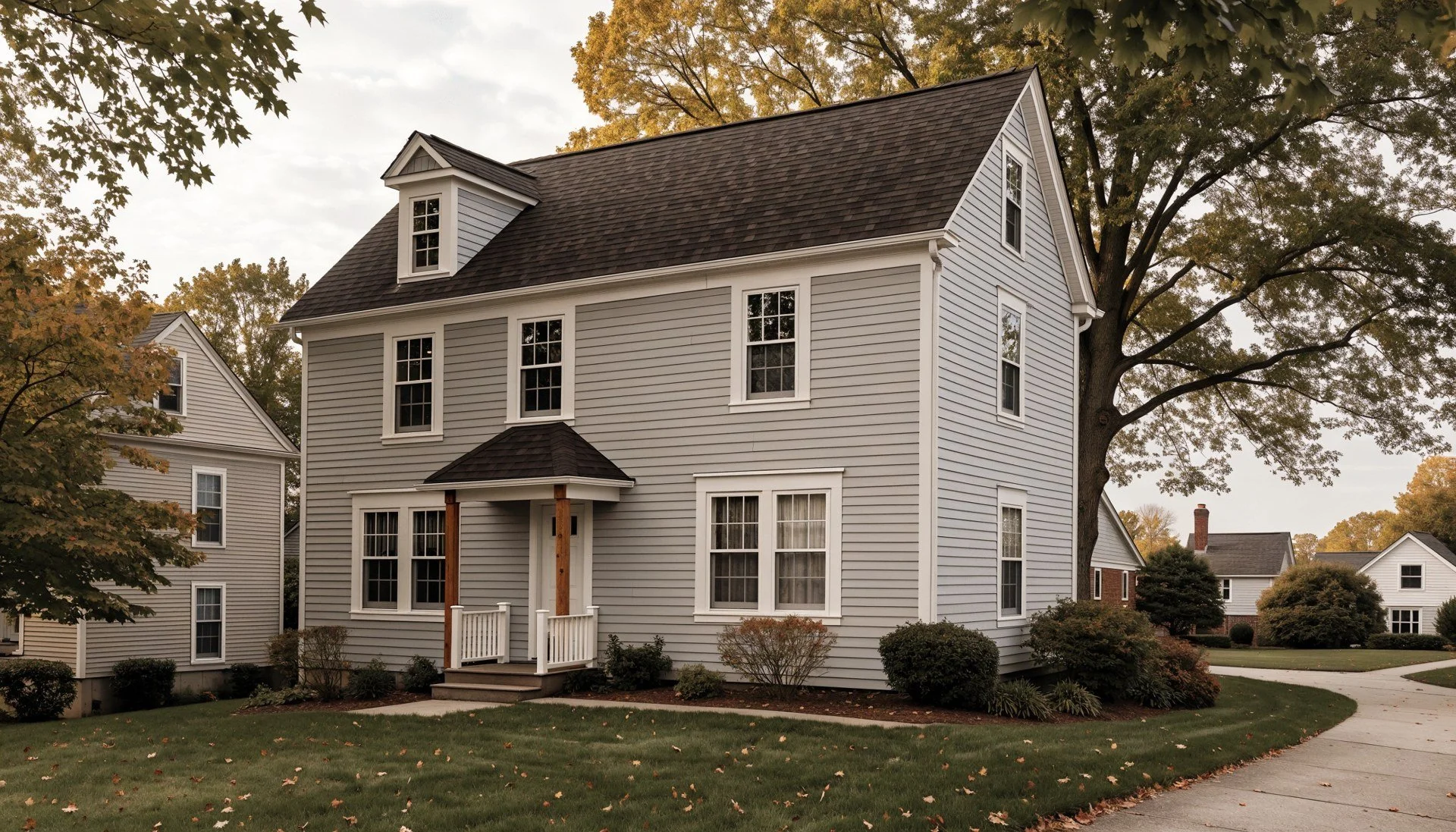
Choosing new siding in Worcester means balancing appearance, upkeep, and the cost of the complete installation. Vinyl and fiber cement can both suit a Central Massachusetts home, but they make different trade-offs.
Vinyl generally costs less upfront and does not need a routine repainting cycle. Fiber cement is worth considering if you prefer a painted-wood appearance and are comfortable planning for finish maintenance. The right choice also depends on what is happening behind your existing siding.
Here is what to compare before you choose materials or sign an estimate.
Vinyl vs. Fiber Cement: The Short Answer
Choose vinyl when: keeping the initial budget manageable and minimizing painting are your main priorities.
Consider fiber cement when: you want a substantial painted exterior with crisp trim details and are willing to maintain its finish.
With either material: prioritize sound walls, properly integrated flashing, and installation that follows the selected product's instructions.
There is no single best siding for every Worcester home. Compare actual samples and written scopes rather than deciding from a material name alone.
What Is the Difference Between Vinyl and Fiber Cement Siding?
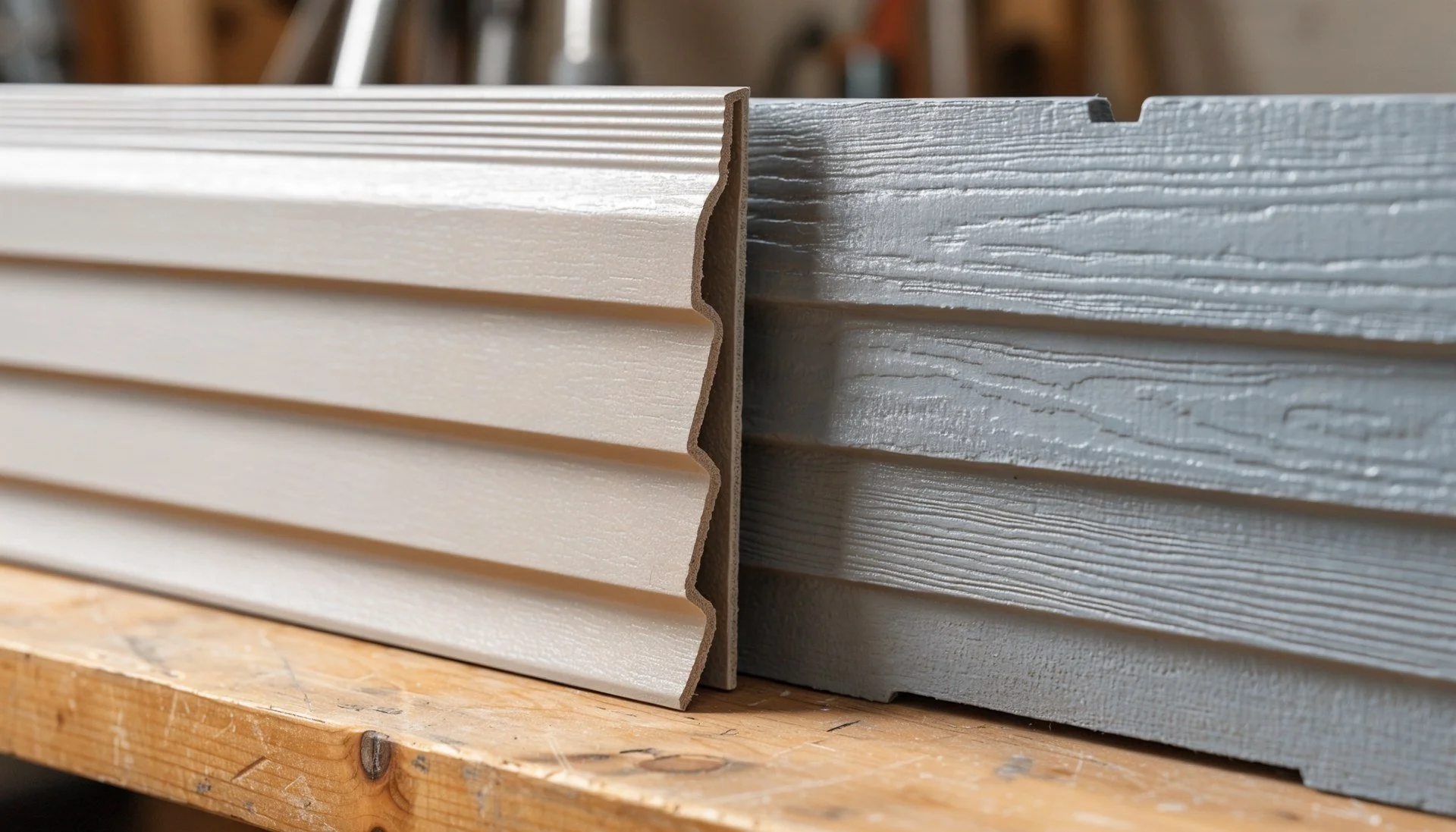
Vinyl siding is a molded plastic cladding installed in interlocking panels. It comes in different profiles and colors, so two vinyl estimates may specify very different products.
Fiber cement combines cement with reinforcing fibers and other ingredients. James Hardie is one manufacturer, which is why homeowners often use the term “Hardie board.” Fiber cement is available in lap, panel, and shingle-style products. Exact composition, finish options, and performance vary by manufacturer. James Hardie's fiber cement overview explains the material and its available profiles.
Ask to see the exact siding line, profile, exposure, color, and trim proposed for your home. A small sample helps, but viewing several courses together can make seams, shadows, and texture easier to judge.
Which Siding Costs Less in Worcester?
Vinyl generally has the lower initial price. Fiber cement typically costs more, though premium vinyl and different project scopes can narrow the difference. James Hardie notes that fiber cement usually costs more than vinyl and that an accurate price requires a project-specific estimate.
A national price per square foot is not a Worcester quote. Your total can change with:
The measured exterior wall area and number of stories.
Removal and disposal of the existing siding.
Access around porches, additions, and tight side yards.
Repairs discovered after the old material comes off.
Window and door flashing, corners, trim, soffits, and fascia.
The selected finish and any painting included in the work.
Insulation upgrades and applicable permit requirements.
Request two estimates based on the same scope: one for vinyl and one for fiber cement. Ask how hidden damage is priced and approved. A cheaper proposal that leaves out preparation or trim is not a direct comparison.
How Do They Handle Central Massachusetts Weather?
Temperature swings and wind-driven rain make installation details important. Vinyl needs room to expand and contract. Fasteners and clearances must follow the manufacturer's directions; panels should not be treated like tightly fastened wood boards. The Vinyl Siding Institute installation manual also explains that vinyl is not a watertight wall covering and requires appropriate water management behind it.
Fiber cement has its own fastening, joint, flashing, and clearance requirements. Ask which installation instructions apply to the exact product being quoted. Do not assume that every fiber cement brand or panel uses the same details.
Material durability also does not make a whole house fireproof. For example, James Hardie describes its fiber cement products as noncombustible, but notes that applied coatings can be damaged by flames. Check the product documentation if fire performance is part of your decision.
For either option, ask how the contractor will handle roof-to-wall intersections, window openings, penetrations, and areas close to the ground. These details deserve as much attention as color.
Which Siding Requires Less Maintenance?
Vinyl: Plan on periodic cleaning and checking for loose or damaged panels. It normally does not need painting. The Polymeric Exterior Products Association's care guide recommends gentle cleaning and checking the manufacturer's restrictions before pressure washing or painting. Keep grills and other significant heat sources away from the siding.
Fiber cement: Plan on cleaning and maintaining the coating and any joints that require sealant. The repainting schedule depends on the product, finish, exposure, and condition, so avoid treating a generic “every ten years” claim as a guarantee. For Hardie siding, the manufacturer recommends a garden hose and a soft, nonmetal brush rather than high-pressure washing in its siding-cleaning guidance.
Before choosing, ask for the maintenance instructions and warranty for the actual siding and finish. Keep material coverage, finish coverage, and workmanship coverage separate when comparing proposals.
Curb Appeal: Compare the Entire Exterior
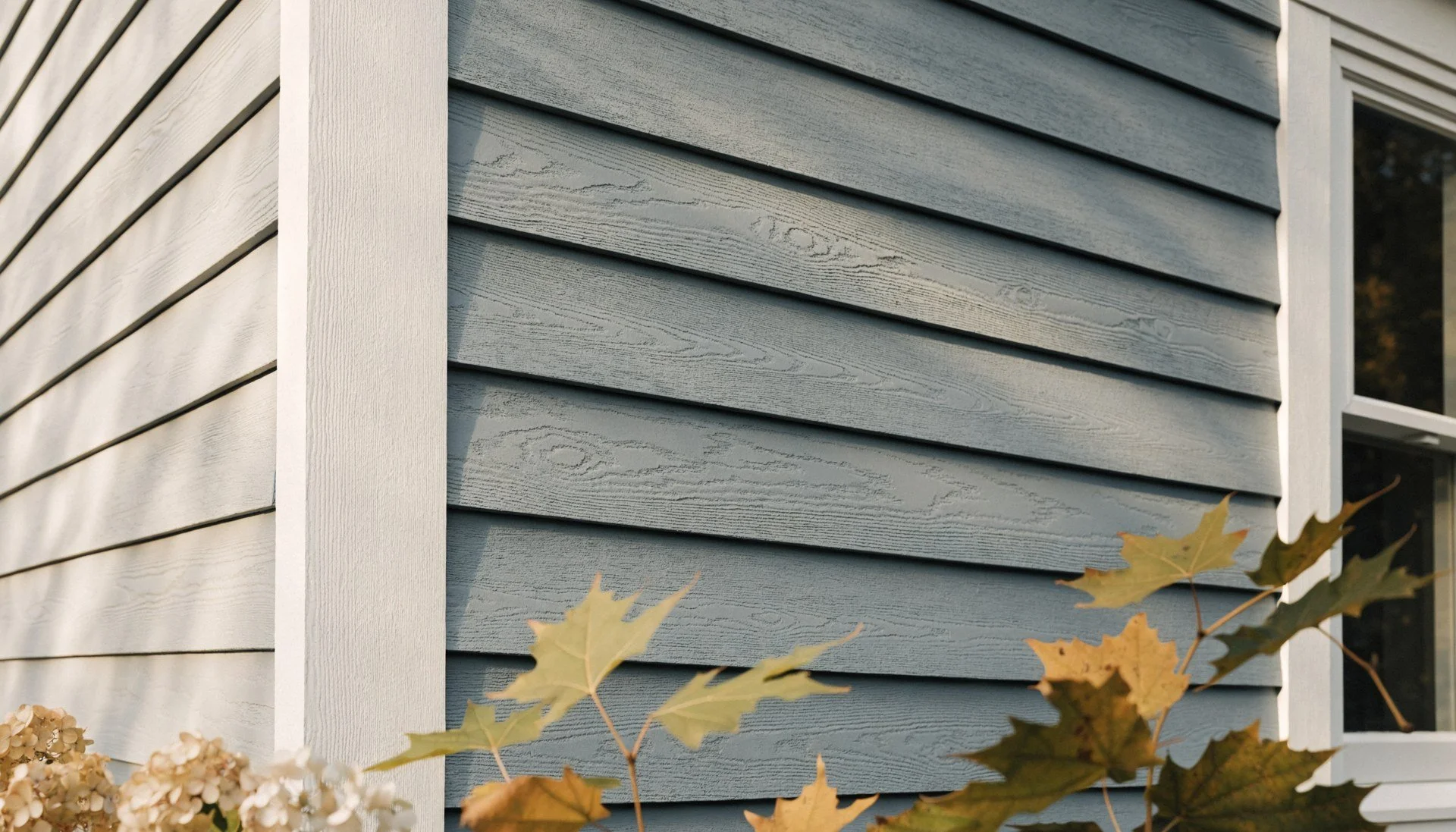
On a Colonial, Cape, or another traditional home, the siding's appearance depends on more than its color. Board width, window trim, corner boards, and transitions around a porch can change the finished result.
Bring a few exterior photos to your consultation and identify what you want to preserve. Ask to see how each proposed profile works with your roof, foundation, and existing windows. Look at samples outdoors, including in shade, before choosing a color.
If you expect to sell, consider the home's overall condition and neighborhood rather than assuming a particular material guarantees a resale return. If you plan to stay, include future maintenance in the decision alongside today's installation price.
Will New Siding Lower Heating Bills?
Replacing the outer cladding alone does not establish how much energy you will save. Air leakage, insulation, windows, and the rest of the wall assembly all matter.
Re-siding can be a useful time to evaluate air sealing or exterior insulation while the walls are accessible. The U.S. Department of Energy's re-siding checklist calls for inspecting existing walls, coordinating insulation with other wall details, and integrating window and door flashing with the water-control layer.
Ask whether insulation is included, which product and R-value are proposed, and how additional thickness changes trim and window details. Treat energy improvements as a defined part of the scope rather than an automatic benefit of either siding material.
Questions to Ask Before a Siding Replacement
Use this checklist when comparing contractors and proposals:
What exact siding product, finish, and trim are included?
Will the existing siding be removed, and how will the walls be inspected?
What flashing and water-resistive barrier work is included?
How are hidden repairs documented, priced, and approved?
Are soffits, fascia, fixtures, cleanup, and disposal included?
What maintenance and warranty documents will I receive?
Who verifies local permits or any applicable historic-property requirements?
If your home was built before 1978, ask about lead-safe requirements before work disturbs painted surfaces. Massachusetts guidance for homeowners explains why a licensed lead-safe renovation contractor may be needed. Raise this early so the estimate accounts for the proper approach.
Frequently Asked Questions
Is vinyl or fiber cement better for a Worcester home?
Vinyl is often a practical choice for a lower upfront cost and less painting. Fiber cement can suit homeowners who prefer its painted appearance and accept finish maintenance. Compare both against your budget, design goals, and the condition of the existing walls.
Does fiber cement siding need painting?
Its finish needs maintenance over time. Some products arrive prefinished, while others are painted after installation. Ask about the selected finish, its care instructions, and its warranty rather than relying on a universal repainting interval.
Can I install new siding over old siding?
Do not assume an overlay is appropriate. The existing material, wall condition, manufacturer's instructions, and applicable requirements must be reviewed first. Removing old cladding may also reveal problems that should be corrected before new siding goes on.
Does MRP install both vinyl and fiber cement siding?
Yes. MRP Building & Remodeling lists both vinyl and fiber cement siding installation, along with soffit, fascia, and trim work, among its home improvement services.
Get a Siding Estimate in Worcester and Central MA
MRP Building & Remodeling serves Worcester and surrounding Central Massachusetts communities, including Shrewsbury, Westborough, Northborough, Grafton, Millbury, Auburn, Leicester, and Holden.
Ready to compare siding options for your home? Request a free on-site consultation and itemized estimate, or call 508-425-9999. Start with your goals and the condition of your exterior, then compare a clear scope for the materials you are considering.
Images are AI-generated illustrations, not completed MRP projects or exact manufacturer products.